
Research
A collection of projects across observational astrophysics, cosmological simulations, and mathematical relativity. My current focus is on constraining dark matter properties using gravitational lensing and stellar kinematics. Check out this astrobite about my work with BCG offsets as a probe of dark matter self-interaction physics!
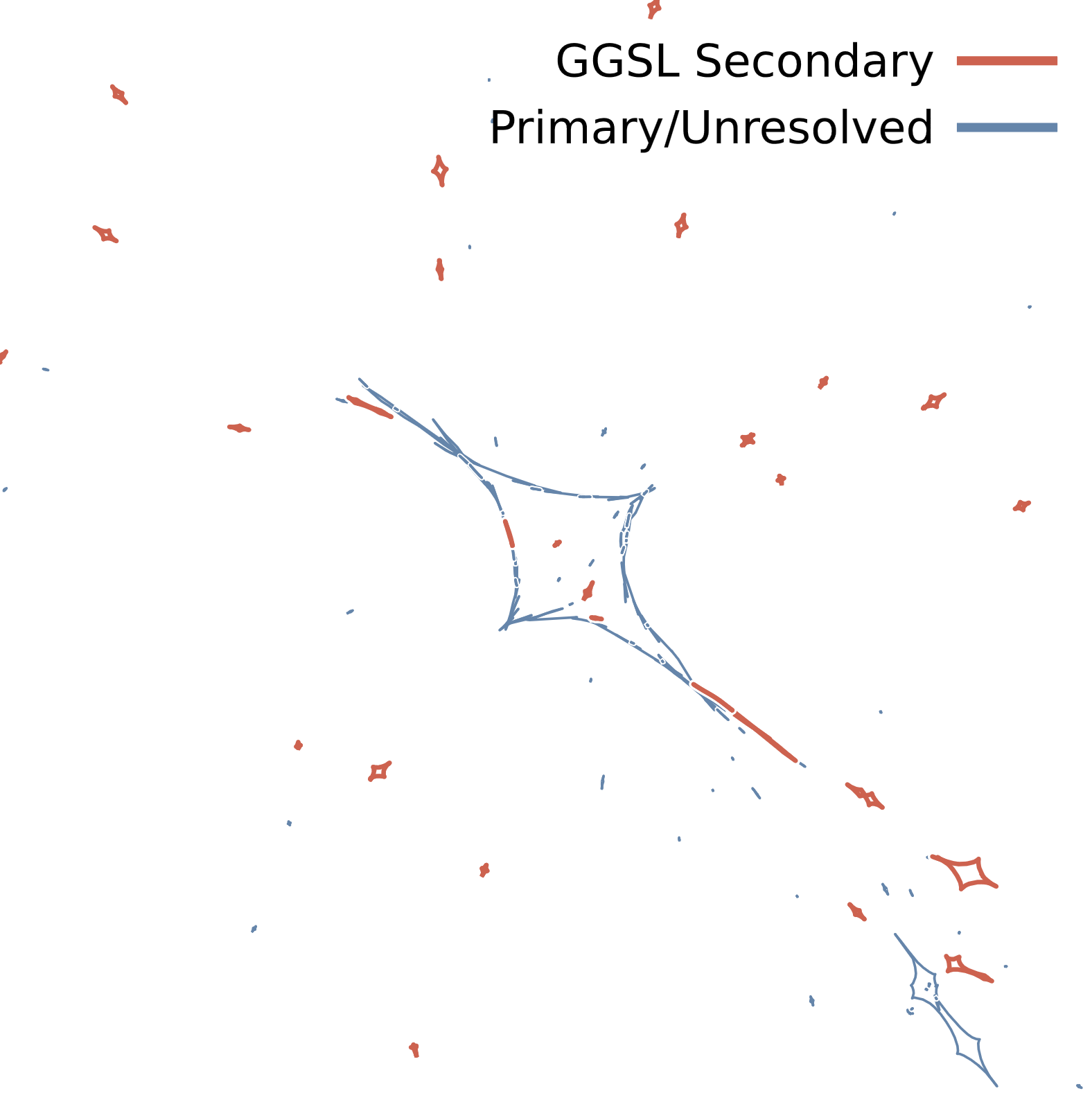
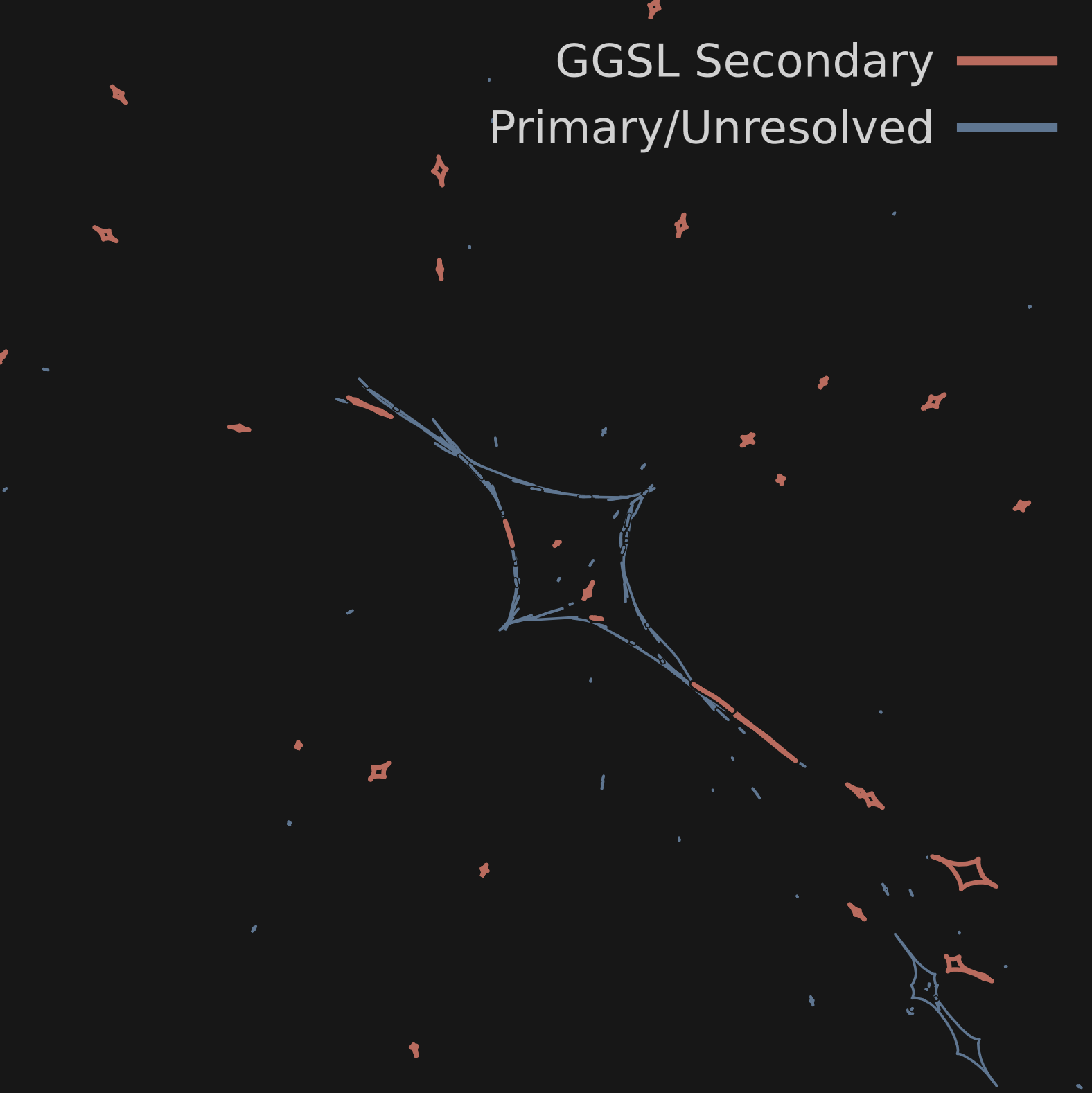
The Galaxy-Galaxy Strong Lensing Cross Section Tension
The Galaxy--Galaxy Strong Lensing (GGSL) Cross Section is a measure of how efficiently galaxies in galaxy clusters can lens background sources, and is related to the underlying feedback and dark matter physics of thsoe galaxies. For several years now a tension between the observed GGSL properties of cluster strong lens members and their counterparts in cosmological simulations has been observed. We study this tension again in the context of full light cone information in the simulations, performing strong lens modelling on the observed and simulated images, and quantifying the effect of correlated structure close to the cluster redshift.
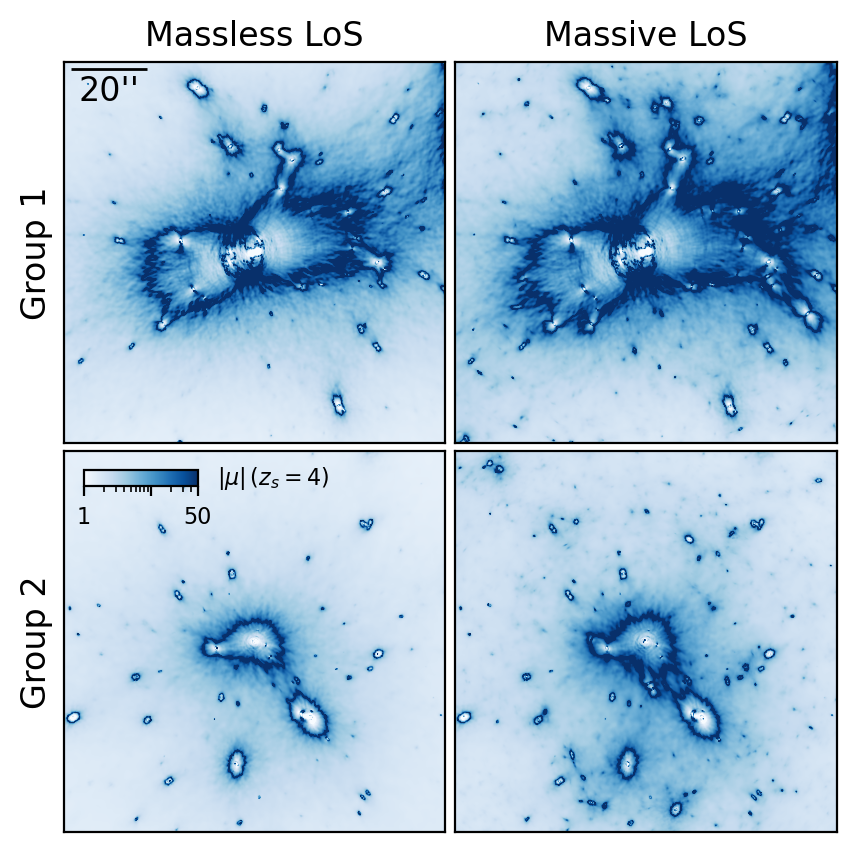
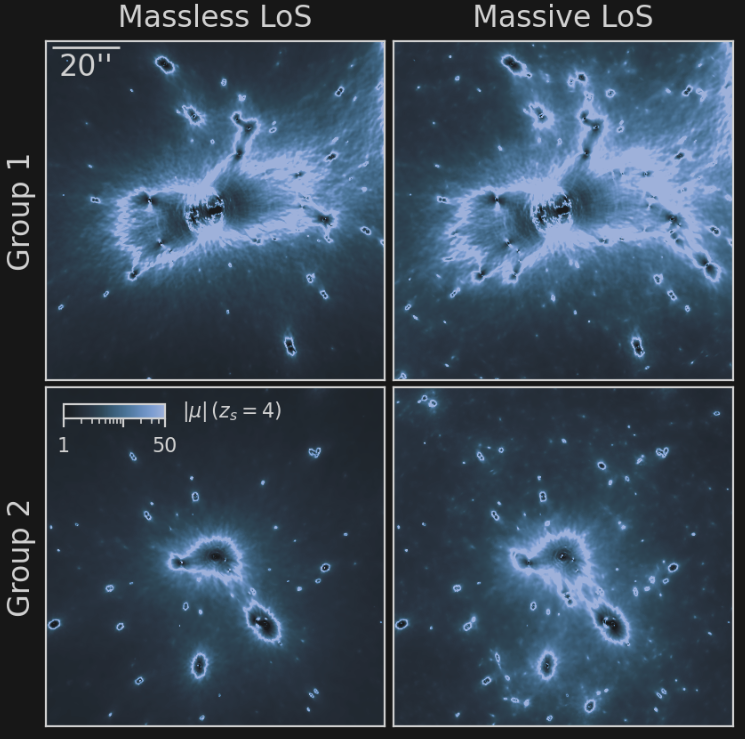
Light Cone Strong Gravitational Lensing in Cosmological Simulations
Generating strong gravitational lensing images directly from cosmological simulation data is incredibly difficult due to the mismatched geometry of the lensing problem (a long, thin cone) and simulaiton boxes (cubes). We establish a methodology for generating images of strong lenses from full light cones in cosmological simualtions, for which the lens, sources and all intervening matter are drawn consistently from the parent simulation. Supervised by Prof. Michael McDonald and Prof. Mark Vogelsberger.
Dark Matter Self-Interaction via Galaxy Wobbling
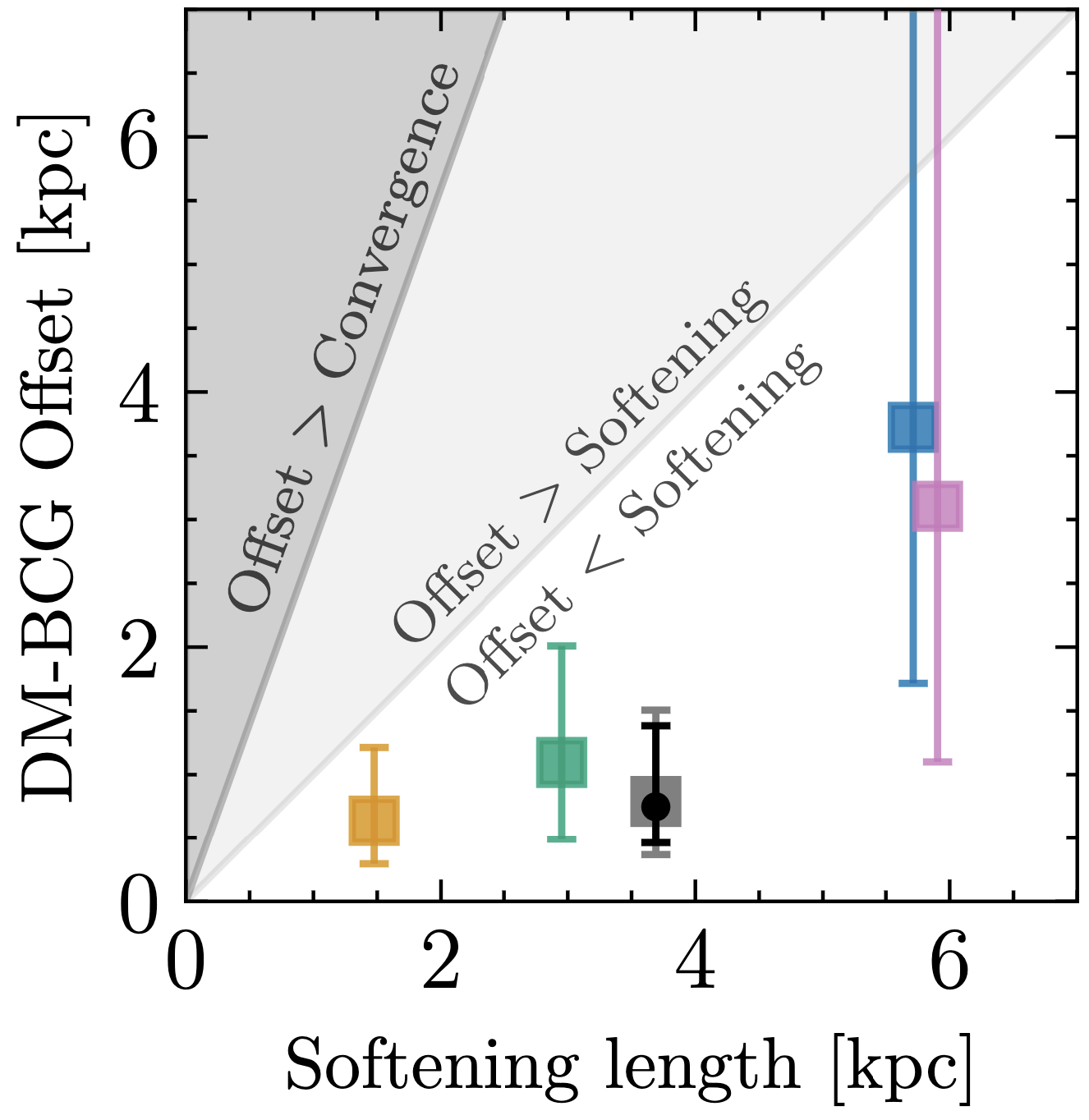
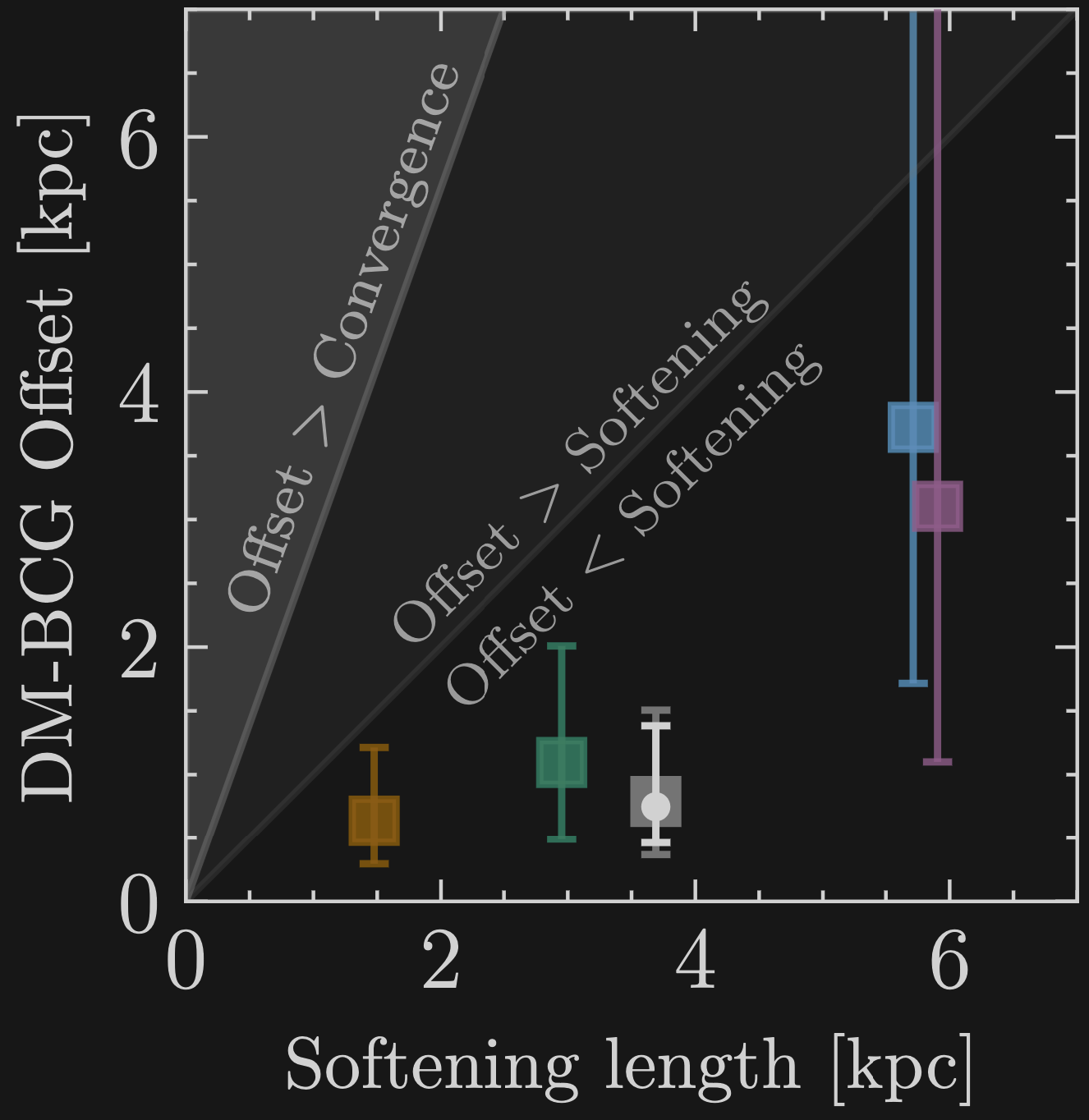
The brightest cluster galaxy (BCG) can wobble over time in the potential well of its host cluster, which is dominated by dark matter. Distributions of BCG–potential-minimum offsets, obtained via strong lensing, constrain the self-interaction cross section of dark matter. Supervised by Prof. Michael McDonald and Prof. Mark Vogelsberger.
Measuring the Milky Way Mass Profile via Stellar Kinematics
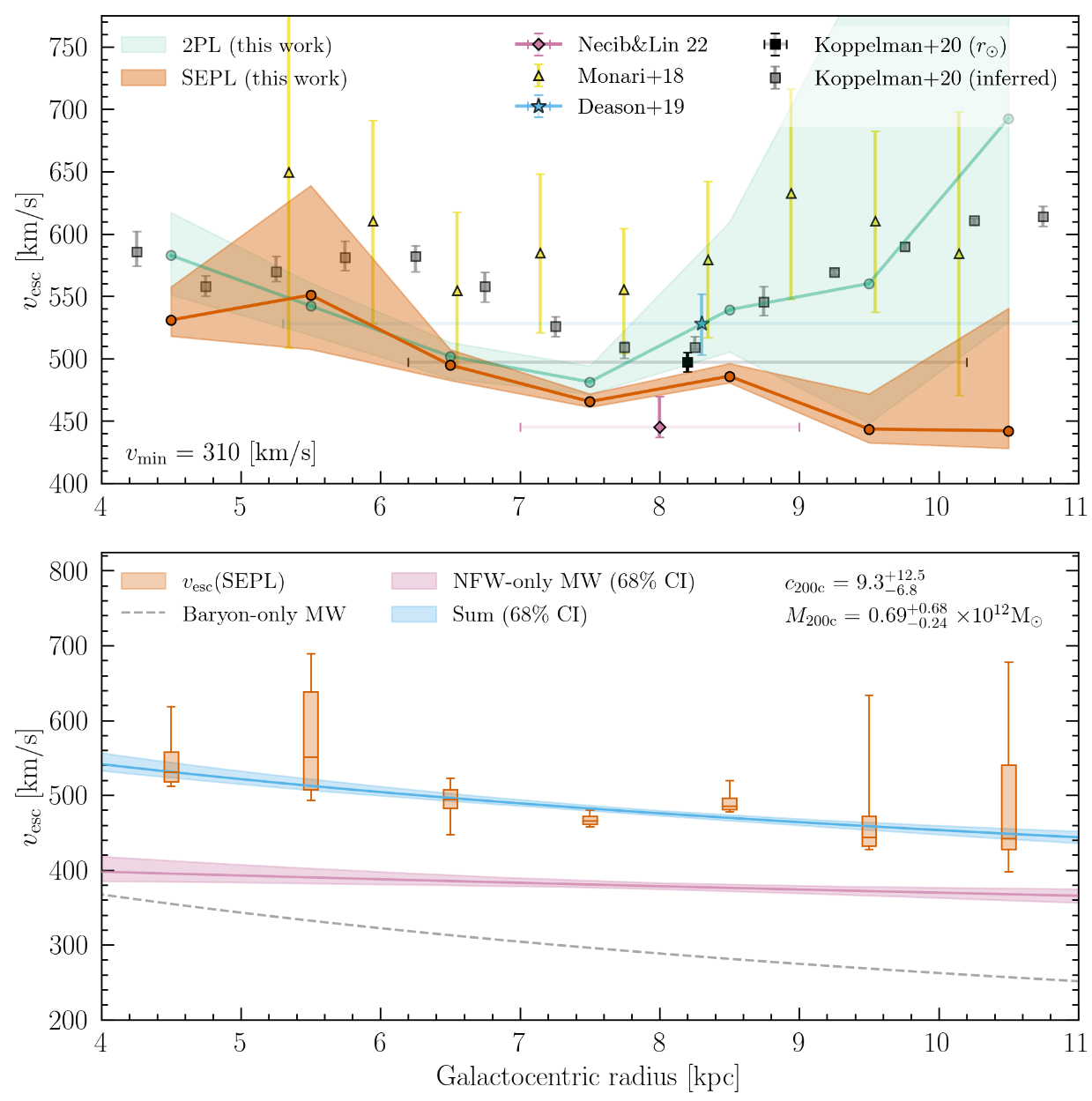
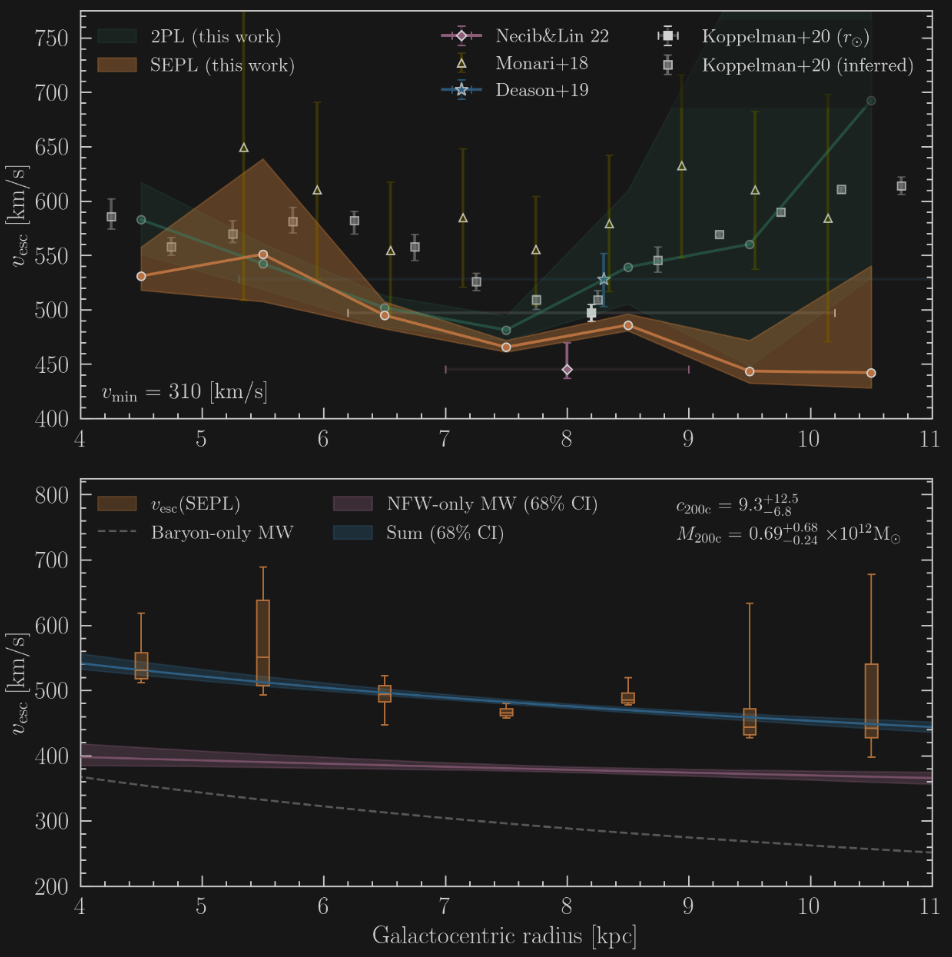
By modelling the tail of the stellar speed distribution of halo stars in Gaia DR3, we obtain an escape velocity profile of the Milky Way from 4–11 kpc. This constrains dark matter halo parameters (NFW, generalized NFW, Burkert), finding a light but consistent Milky Way mass. Supervised by Prof. Lina Necib. and Prof. Tongyan Lin.
Exact Wavelike Solutions in General Relativity
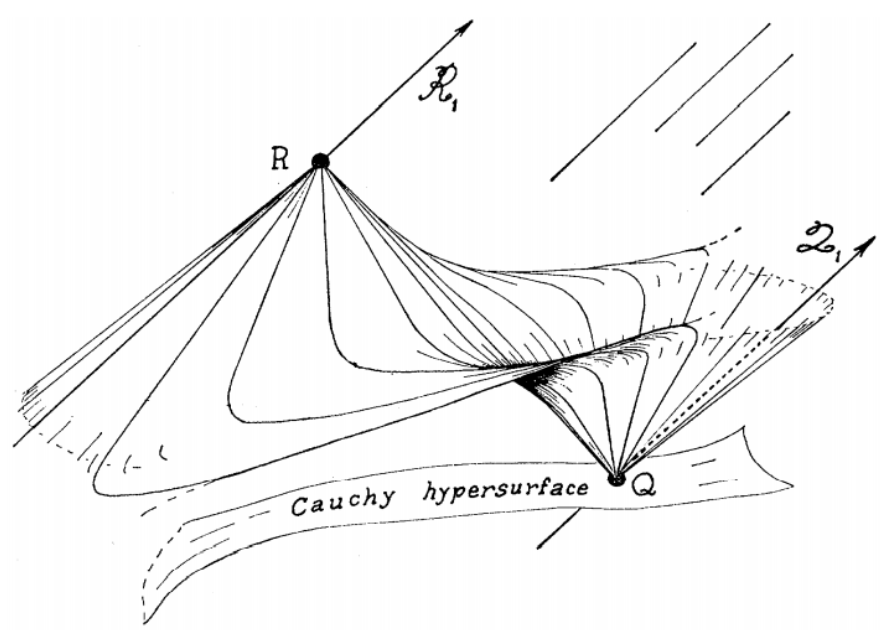
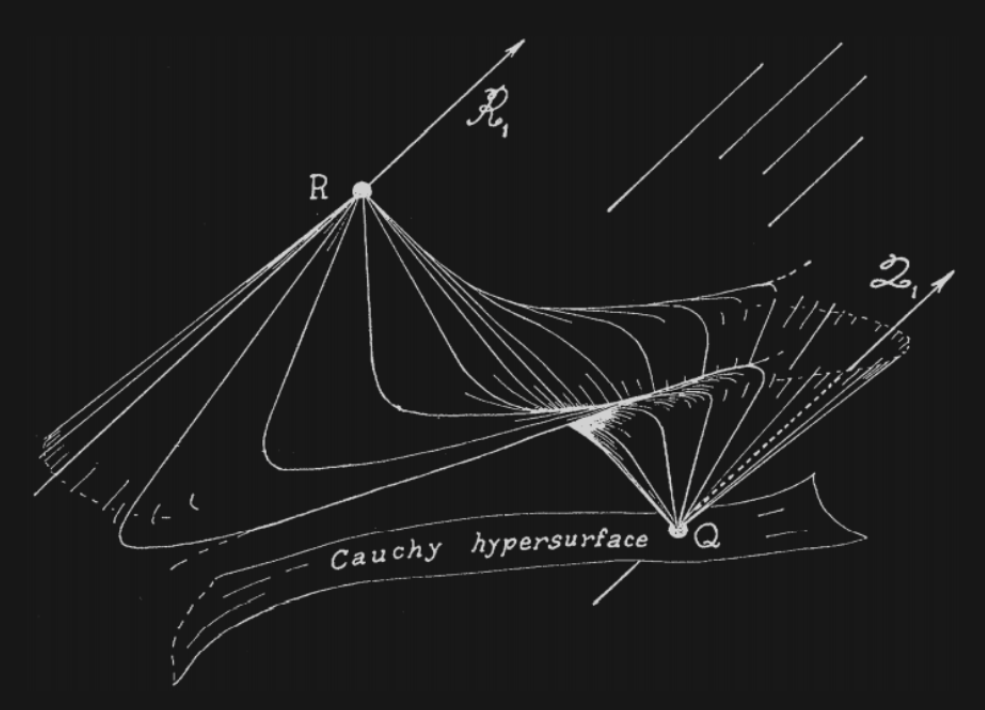
Master's thesis investigating the mathematical structure of pp-wave spacetimes, covering Penrose limits, the causal ladder, and the Ehlers-Kundt conjecture. Supervised by Prof. Carla Cederbaum. and Prof. Amir Babak Aazami.